Classic Solitaire
Big Cake AppsCard
4.75.92K Reviews
- Version
- 2.14.104
- Installs
- 10.00M
- Age Rating
- Everyone
Screenshots
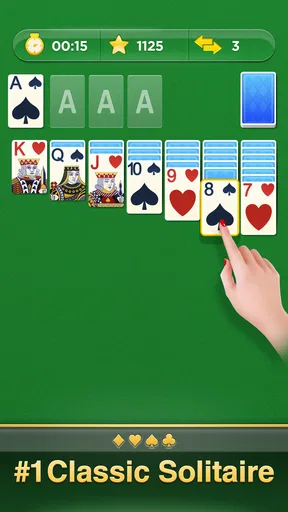
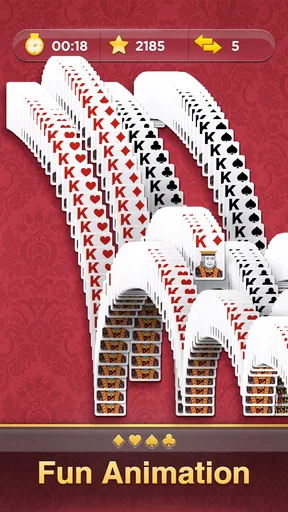
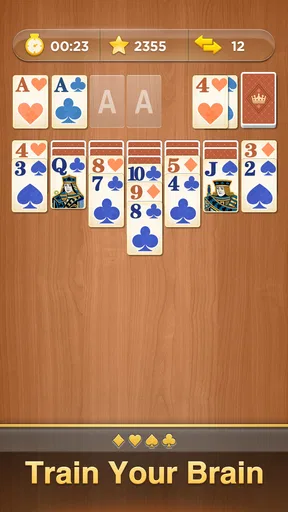
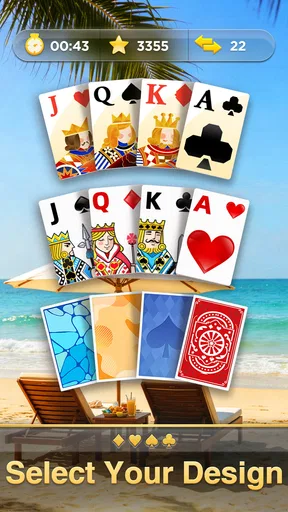
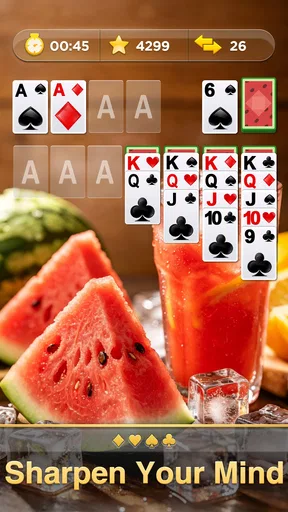
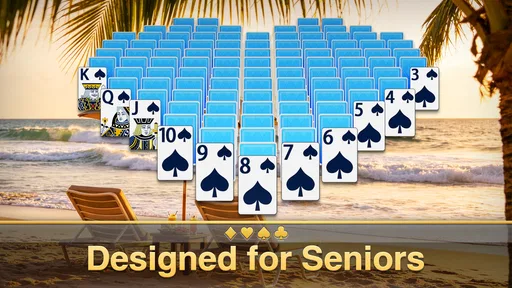
Our Review of Classic Solitaire
 Analysis by Appyee
I usually judge a solitaire game by what happens after the first few pleasant sessions. Almost any clean card layout can provide a relaxing break on day one, but the real question is whether it still feels worth opening when the novelty has gone. After spending time with Classic Solitaire, my answer is cautiously positive: it is a straightforward card game from Big Cake Apps that is easy to understand, quick to start, and well suited to small gaps in the day. It does not try to turn solitaire into a complicated hobby, and that simplicity is both its strongest quality and its main limitation.
This is a free Android card game with an Everyone age rating, so it is approachable for a broad audience. It has reached over 10 million installs and holds a 4.7 average from around 47 thousand ratings, which gives a useful sense of how widely it has found an audience. I would not treat popularity as proof that every player will enjoy it, but it does match my impression that the game is designed around familiar rules rather than a steep learning curve or a large amount of setup.
Why the first week feels so easy
I’d use this section to look beyond the early comfort of familiar rules and consider what actually keeps a small card game in my routine. For me, the useful test is whether a hand still feels like a choice rather than a reflex; that leads naturally to the longer-term question of what value remains once the first easy wins are no longer new.
A familiar game with almost no learning barrier
The first thing I liked was how quickly I could get into a round. Classic Solitaire focuses on the traditional solitaire experience instead of asking me to learn a new card system, understand a story, or manage a complicated collection. If you already know the basic rhythm of moving cards, uncovering hidden cards, and building suited stacks, you can begin playing naturally. If you are new to solitaire, the format is still readable enough to learn by trying a few moves.
That makes it particularly useful for short sessions. I can open it while waiting for an appointment, play a hand during a quiet coffee break, or use a round as a gentle transition between tasks. The game does not demand the kind of attention that a competitive multiplayer title requires, yet it still gives me a small problem to solve. That balance is the reason I can imagine returning to it more often than I would return to a larger game.
The store summary presents it as a way to relax and enjoy wins, and that description fits the practical experience without needing exaggerated promises. The pleasure comes from gradually clearing the layout and making a sequence of sensible decisions. Even a modest win feels satisfying because the board visibly changes as hidden cards become available. It is a quiet reward loop rather than a dramatic one.
Good for routine moments, not just spare time
My most convincing use case is a repeated daily pause. Imagine finishing lunch and having five minutes before the next task. A demanding game would be too much, while scrolling through social media can leave me feeling more distracted than refreshed. A short solitaire hand offers a middle ground: enough structure to occupy my mind, but not enough pressure to take over the break.
It also works well for people who prefer games without social obligations. There is no need to coordinate with another player, wait for a match, or keep up with a competitive schedule. That makes it a better fit for someone who wants a private, low-pressure pastime. I would recommend it to casual players, older relatives who already know classic card games, and anyone looking for a simple mental reset.
At the same time, I would not recommend it as the first choice for someone seeking deep progression, character development, or constant novelty. Its appeal depends on enjoying the card puzzle itself. If your interest fades after a few familiar hands, no amount of polish can completely solve that problem.
Small habits that improve the opening sessions
One useful way to approach the game is to avoid treating every hand as a race. In the early sessions, I found it more enjoyable to pause before making an obvious move and ask whether that move exposes a hidden card or blocks a useful sequence. That small habit turns the game from simple tapping into a more deliberate puzzle.
I also prefer playing in short, clearly defined sessions. Stopping after a win keeps the game associated with a pleasant finish, while repeatedly chasing one difficult hand can make a relaxing app feel strangely demanding. This is a minor change, but it matters when deciding whether a casual game will become part of a routine or simply disappear from the phone after a week.
What remains valuable after the novelty fades
I’d judge the lasting value less by how many hands I can play and more by whether the game suits a particular moment: a quiet pause, a short wait, or a break from more demanding entertainment. That perspective also makes the trade-offs clearer, including whether a free game with optional purchases feels comfortable enough to keep around.
The month-to-month appeal is consistency
Classic Solitaire does not need to reinvent itself every time I open it. Its ongoing value comes from the fact that the basic puzzle remains understandable while the decisions within each layout can still vary. Some hands feel almost automatic, while others force me to choose between revealing a hidden card now or preserving a sequence for later. That uncertainty gives the familiar rules enough texture to support occasional returns.
For me, the game is strongest as a background habit rather than a primary entertainment destination. I would not spend an entire evening with it unless I was specifically in the mood for solitaire, but I can see myself opening it several times across a month. That distinction is important. A game does not have to provide hours of continuous content to earn a place on a phone; it only needs to serve its intended moment reliably.
The current version is 2.13.14, and the app has been available since June 3, 2020. Those details suggest a product that has had time to settle into its role rather than appearing as a brand-new experiment. From a user’s perspective, the practical benefit is familiarity: I know what kind of experience I am opening, and I do not have to relearn the interface each time I return.
How it compares with other solitaire choices
Compared with a physical deck of cards, the app is more convenient and less forgiving of absent-mindedness in one specific way: the phone handles the setup, while a real deck gives me a more tactile and screen-free experience. If I want to rest my eyes or avoid another phone session, physical cards are the better option. If I want to begin immediately while traveling or waiting somewhere, the app wins.
Compared with feature-heavy digital card collections, this game is easier to approach but may feel less substantial. Some alternatives surround solitaire with multiple modes, elaborate challenges, progress systems, or visual themes. Those extras can provide stronger long-term motivation for players who need goals. They can also create clutter and make a simple hand feel like part of a larger management task. Classic Solitaire’s narrower focus is preferable when I want the card game without a lot of surrounding noise.
It also differs from competitive card games because success is personal rather than social. There is no opponent creating urgency, so the experience is calmer. The trade-off is that players who enjoy bluffing, adapting to human behavior, or testing themselves against a leaderboard will probably find it too quiet. I see it as a companion to those games, not a replacement for them.
Three practical ways to get more from it
- Use it as a reset, not an endless feed. A single hand between activities gives the game a clear purpose and helps preserve its relaxing quality.
- Think in terms of hidden-card access. When deciding between two legal moves, I usually favor the one that opens more of the layout, unless it creates an obvious blockage. This makes the familiar rules feel more strategic.
- Keep difficult hands in perspective. If a round starts feeling like a test of patience rather than a pleasant puzzle, leaving it and returning later is often better than repeatedly forcing the same decision.
These are not dramatic advanced systems, but they are the details that determine whether the app becomes useful in everyday life. The game is simple enough that the player’s habits matter more than a large feature list.
Where the maintenance burden stays low
One of the app’s long-term advantages is that it does not ask me to maintain a complicated account, build a collection, or remember a large set of ongoing objectives. I can treat it as a self-contained activity. That low maintenance is valuable for a casual game because it removes the feeling that I am falling behind whenever I have not opened it for a while.
The Android requirement is also fairly accessible: it runs on Android 6.0 or later. That makes it suitable for people using older devices, although the exact feel will naturally depend on the phone or tablet. I appreciate that the game does not position itself as something that requires a recent flagship device. For a card game with short sessions, broad device accessibility makes more sense than demanding impressive hardware.
There is one financial detail worth keeping in mind. The game is free to download, but optional in-app purchases range from $0.99 to $9.99 per item. I would approach those purchases carefully and decide first whether the basic experience already suits me. For a simple solitaire title, spending should be a personal choice rather than something I feel pushed into just to make the game usable.
What can cause fatigue over time
The biggest source of fatigue is repetition. Solitaire is intentionally built around a limited core idea, and that means the same comfort that makes it accessible can eventually make it feel predictable. If I play too many hands in one sitting, the decisions begin to blur together. The app works better when I leave space between sessions instead of expecting it to provide constant stimulation.
Another possible weakness is emotional intensity. Wins are satisfying, but they are modest victories. There is no story climax or dramatic skill ceiling to keep me invested when I am tired of arranging cards. Players who need frequent surprises may find the month-to-month experience thin, even if they respect the clean simplicity.
I also think the free-to-play structure deserves a realistic assessment. Optional purchases are not automatically a problem, but they can change how a player feels about a supposedly simple pastime. If you dislike seeing purchase options in casual games, or if you prefer paying once and removing all commercial prompts, a paid card app or a physical deck may be a better fit. Classic Solitaire is most appealing when its free entry and uncomplicated play outweigh that irritation.
Who should skip it
I would skip this game if I wanted multiplayer competition, rich audiovisual presentation, or a strong sense of progression from one session to the next. It is also not ideal for someone trying to reduce screen time completely, since the physical version of solitaire provides a similar puzzle without a phone. Likewise, players who already own a favorite solitaire app with the exact layout and controls they prefer may not gain enough by switching.
On the other hand, I would choose it for someone who wants a familiar card game that can be started quickly and abandoned without consequences. It is especially suitable for irregular players because there is no need to remember a complex campaign or return on a schedule. That makes it more forgiving than many mobile games, even if it is less ambitious.
My long-term verdict
After the first-week novelty fades, Classic Solitaire earns its space through reliability rather than surprise. Big Cake Apps has kept the focus on the classic card puzzle, and that focus makes sense for a free game aimed at Everyone. The 4.7 average and more than 10 million installs show that many players appreciate this kind of accessible experience, but my recommendation rests more on how naturally it fits short, quiet moments.
I would keep it installed if I wanted a dependable five-minute activity, did not need multiplayer features, and was comfortable with a free app that includes optional purchases. I would remove it if I found myself opening it automatically without enjoying the decisions, or if I wanted a richer game with stronger long-term goals. The right test is simple: after a few weeks, do you still look forward to one hand, or are you only opening it out of habit?
For me, it passes that test in moderation. It is not a game I would play continuously for hours, and it should not be judged by that standard. Its lasting value is quieter: a familiar puzzle, a low maintenance burden, and a useful way to occupy a small pause without demanding much from me. If you want solitaire to remain a calm daily option rather than a major gaming commitment, this is a sensible choice.
Privacy and Permissions
See what permissions an app requests and how it handles your data.
- Photos/Media/Files
- read the contents of your USB storage, modify or delete the contents of your USB storage
- Storage
- read the contents of your USB storage, modify or delete the contents of your USB storage
- Wi-Fi connection information
- view Wi-Fi connections
- Other
- view network connections, full network access, control vibration, prevent device from sleeping, Google Play license check
Verdict
Strengths of Classic Solitaire
- Works offline, making it ideal for travel or areas with limited internet.
- Simple controls are easy for beginners to understand and use.
- Quick games fit well into short breaks or spare moments.
- Runs smoothly on most older and newer mobile devices.
- Classic rules provide a familiar experience for longtime solitaire fans.
Limitations of Classic Solitaire
- Frequent ads may interrupt play, especially between completed games.
- Limited variety can make the experience feel repetitive over time.
- Some features may require payment or watching promotional videos.
- Random deals can occasionally feel frustrating when no winning move exists.
- Small cards may be difficult to read on compact phone screens.
Other Releases by Big Cake Apps
View All
Daily Jigsaw Puzzles
Trivia4.8
Similar Picks in This Category
View All
Solitaire - Classic Card Games
MobilityWare4.6

UNO!™
Mattel163 Limited4.3

Spider Solitaire: Card Games
MobilityWare4.6

Solitaire.com - Classic Cards
Tripledot Studios Limited4.7

Plants vs. Zombies™ Heroes
ELECTRONIC ARTS4.1

Hearthstone
Blizzard Entertainment, Inc.4.1
Frequently Asked Questions
What is Classic Solitaire, and how is it played?
Classic Solitaire is the traditional single-player card game commonly known as Klondike Solitaire. The goal is to move all cards to four foundation piles, organized by suit from Ace through King. You arrange cards in descending order with alternating colors in the tableau, draw cards from the stock, and use empty columns strategically to complete the game.
Can I play Classic Solitaire without an internet connection?
Yes, Classic Solitaire is generally designed to work offline, allowing you to enjoy games without Wi-Fi or mobile data. Offline play is useful when traveling or when you want to save data usage. However, certain features such as advertisements, cloud synchronization, online statistics, daily challenges, or leaderboard updates may require an internet connection.
Does Classic Solitaire include different game modes or difficulty levels?
Most versions of Classic Solitaire focus on Klondike gameplay, but the available options can vary depending on the app edition. You may find draw-one and draw-three modes, scoring systems, timed games, daily challenges, hints, and undo functions. These features provide flexibility for beginners while still offering a more demanding experience for experienced players.
Is Classic Solitaire free to download and play?
Classic Solitaire is usually free to download and play, making it easy to start without an upfront purchase. Free versions commonly support themselves through advertising, which may appear between games or during menu navigation. Some editions may offer optional in-app purchases to remove ads, unlock themes, access extra features, or support the developer.
Is Classic Solitaire suitable for beginners and older players?
Yes, Classic Solitaire is suitable for beginners, casual players, and older users because its rules are familiar and easy to learn. Clear card layouts, simple tap or drag controls, and helpful hints can make the game accessible. Before downloading, check whether the specific version offers adjustable card sizes, readable graphics, and an interface that feels comfortable on your device.
Play our best games!


